Key Takeaways for Business Owners & Political Leaders
- Push for reciprocal market access—fair rules for both sides.
- Adopt a Red / Yellow / Green framework— invest heavily in collaboration zones (green) and draw hard lines in zones (red) where security is non-negotiable.
- Plan for resilience—tariffs and controls will remain part of the landscape for the foreseeable future. Plan accordingly.
The Unpopular Truth
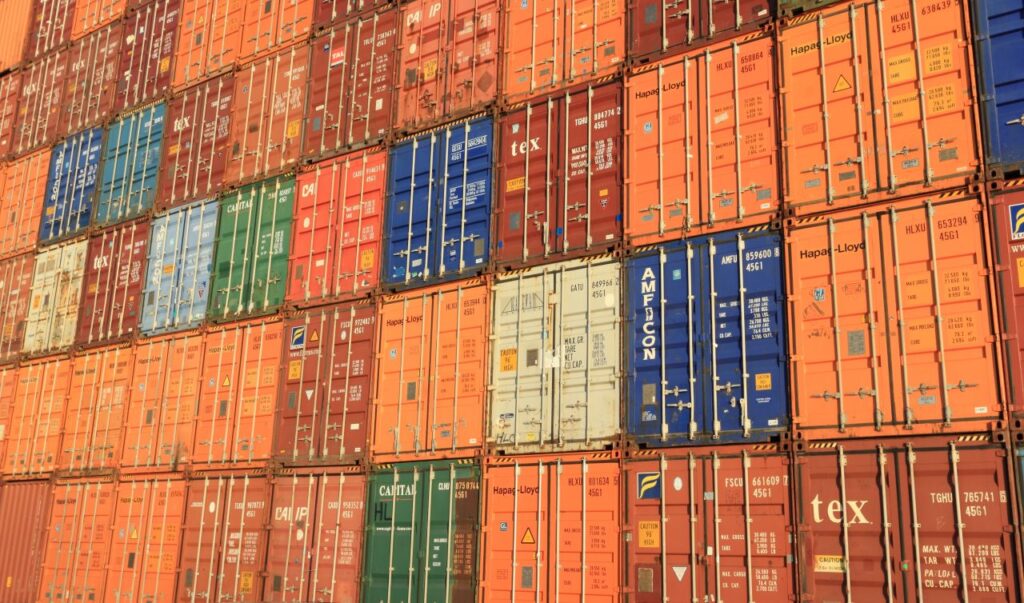
A tariff war between the United States and China was inevitable. Two economic giants competing for global influence and market share will encounter friction. The problem is not regulation—it’s strategy. We are fighting the wrong battle in the wrong way.
How We Got Here
When Deng Xiaoping launched China’s export-led reforms in the late 1970s, the country opened its doors to global trade. Since then, the U.S. and China have been locked in a complex “frenemies” relationship—cooperating and competing at the same time.
Today, that relationship is under strain. Tariffs, export controls, and political rhetoric dominate the headlines. If we want sustainable growth, we need a smarter framework for collaboration and competition.
The Red / Yellow / Green Strategy
I propose a simple but powerful model: Red, Yellow, Green. It determines where to collaborate, where to proceed cautiously, and where to draw hard lines.
Green: Collaborate Freely
Green zones are sectors where collaboration benefits both nations without compromising security—think commodities and general consumer goods such as paperclips, basic electronics, and household items. The U.S. should not waste resources competing with China on low-margin, high-volume products. We do not have the wage structure to bring commodity manufacturing back at scale; it’s better to focus elsewhere.
Leverage our strengths:
- America: Best-in-class innovation and design.
- China: World-class scalability and manufacturing efficiency.
Together, these capabilities create products that improve lives globally. Imagine U.S. firms focused on breakthrough ideas while Chinese partners perfect mass production and distribution. That synergy lowers costs, raises quality, and advances functionality.
Yellow: Collaborate with Caution
Yellow zones involve intellectual property, advanced technologies, and sensitive data. Collaboration is possible, but decisions require a customized, consistent rubric that evaluates:
- IP protection measures;
- Mutual development commitments; and
- Enforcement of agreed standards.
Progress should be iterative. If either side violates trust—whether China fails to protect IP or the U.S. imposes unilateral rules—there must be consequences. Accountability must run both ways.
Red: Do Not Collaborate
Red zones are non-negotiable. These include national security and core competitiveness sectors—advanced defense systems, critical infrastructure, and strategic technologies. Collaboration here is not merely risky; it’s hostile. Sharing trade secrets in these areas threatens sovereignty and global stability.
Why This Matters
I lived in China for five years—Nanjing from 2006 to 2009, Suzhou from 2010 to 2012—and saw how infrastructure innovation transforms economies. High-speed rail cut a two-hour trip to Shanghai down to 45 minutes. Living in Suzhou and working in Shanghai became normal. That single innovation reshaped local economies: people could live where costs were lower, work in a global hub, and still be home for dinner.
Imagine applying that level of transformative thinking in the U.S.—from healthcare to electric vehicles to AI and robotics. Collaboration in these sectors could deliver world-class breakthroughs. Yet we remain fixated on differences instead of opportunities. That’s frustrating—and costly.
The Missed Opportunity
As Herman J. Russell said, “Collaboration beats competition every day of the week.” If American companies don’t gain meaningful access to China’s market, what was this tariff war for? A Chinese entrepreneur can start a business in the U.S. with a few hundred dollars and a simple process. Meanwhile, Americans in China face steep barriers—complex regulations, costly Wholly Owned Foreign Enterprises (WOFEs), and banking restrictions. That imbalance must change.
A Personal Perspective
I know the pain of trade wars. During the first Trump administration, tariffs crushed my growing import/export business—raising costs by over 300% overnight. It was the hardest experience of my career, but it forced me to think strategically: decoupling is necessary in some areas; collaboration is essential in others.
If we fail to find that balance, businesses will drift like sailboats in a storm—lost in policy waves they cannot control.
The Call to Action
Let’s stop reacting and start planning. Let’s think long term. The U.S. and China will always need each other. Our ability to navigate complexity will determine whether the world enjoys the benefits of cooperation—or suffers the pain of conflict. Finally, we must calculate the opportunity cost of what a more collaborative structure (Red / Yellow / Green) could have achieved.